
Caprylic Triglyceride CAS: 73398-61-5
Caprylic Triglyceride CAS: 73398-61-5

Recent comments from Energy Secretary Wright indicating that Hormuz tolls are no longer under consideration have introduced a new policy signal for global energy and chemical markets. Procurement and compliance teams should understand how changing policy direction can influence logistics planning, freight costs and sourcing strategies.

Despite volatile monoethanolamine and ethylene oxide markets, taurine supply remains resilient. Chinese producers are offsetting feedstock pressures, offering stability for H2 2026. Supplement makers must reassess sourcing strategies to secure this dependable supply.

Brent crude price stability at $74.06 is giving chemical buyers a temporary reference point for Q3 contract planning. Procurement teams are watching energy markets closely as Gulf supply risks continue to influence commodity chemical pricing.

The upcoming ECHA SVHC update under EU REACH is expected between July and August 2026, with potential additions affecting flame retardants, phthalates and organotin compounds. Chemical buyers should prepare supplier declarations and compliance updates before the July 31 deadline window closes.

The 2026 Hormuz crisis exposed structural weaknesses in global chemical supply chains. The lessons learned should now be translated into permanent procurement policies that strengthen resilience long after the crisis ends.
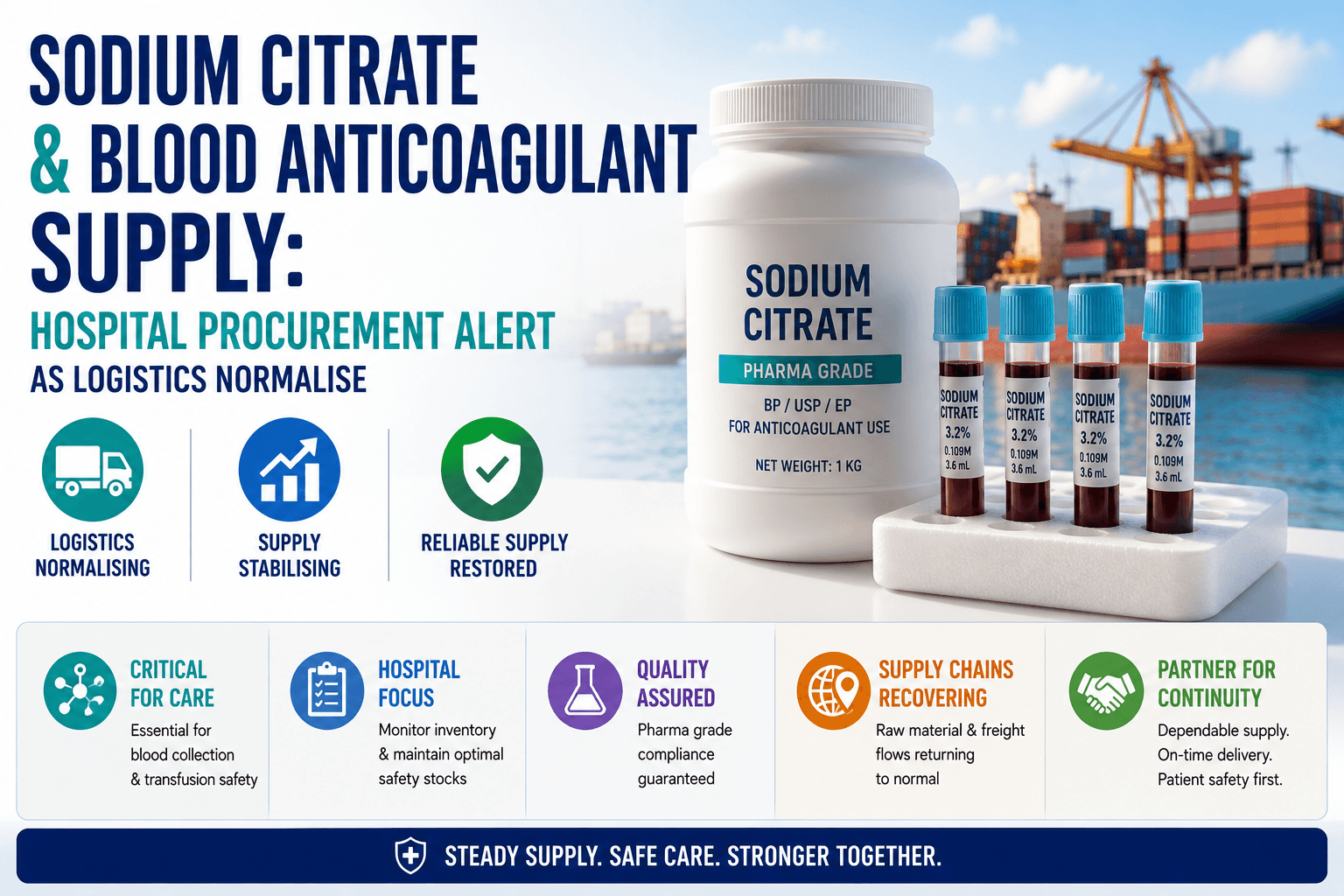
Sodium citrate supply is stabilizing as global logistics recover and freight costs begin easing. Hospital procurement teams should use the next 6–8 weeks to rebuild safety stock levels after months of inventory drawdown during the 2026 supply disruption.
We're committed to your privacy. Tradeasia uses the information you provide to us to contact you about our relevant content, products, and services. For more information, check out our privacy policy.