
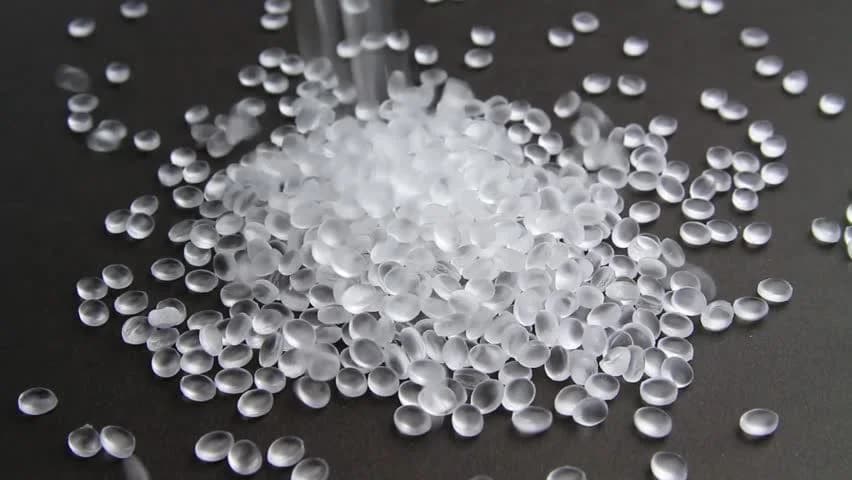
Polyethylene Terephthalate (PET)
- IUPAC Name
- poly(ethylene terephthalate)
- Molecular Formula
- (C10H8O4)n
- Synonyms & Trade Names
- PET; Polyethylene terephthalate; Dacron; Mylar; Terylene
- Purity / Assay (%)
- Polymer grade
- Grade / Quality Level
- Industrial Grade
- Physical Form
- Solid
Categories
Technical Document
Brief Overview
Polyethylene terephthalate (PET) is a thermoplastic polymer belonging to the polyester family. PET is commonly used to make plastic bottles for beverages, food containers, and other types of packaging due to its durability and resistance to impact and chemical degradation. It is also used in the textile industry to produce fibers for clothing, carpets, and other textile products. PET is highly recyclable, and can be used to produce new products through mechanical recycling, which involves melting down used PET products and reforming them into new products.
Manufacturing Process
Polyethylene terephthalate (PET) is a commonly used thermoplastic polymer that is widely used in the production of packaging materials, including bottles, films, and containers. The manufacturing process of PET involves several steps, which are as follows:
Purification of raw materials: The raw materials used in the production of PET are purified to remove any impurities that might affect the quality of the final product. The raw materials typically include terephthalic acid or dimethyl terephthalate (DMT) and ethylene glycol.
Reaction: The purified terephthalic acid or DMT is reacted with ethylene glycol in the presence of a catalyst, typically antimony trioxide, to produce a monomer called bis(2-hydroxyethyl) terephthalate (BHET).
Polymerization: The BHET monomer is then polymerized by heating it at high temperatures, typically around 260°C, under vacuum or in the presence of a nitrogen atmosphere. This process results in the formation of PET resin, which is a white, crystalline powder.
Pelletizing: The PET resin is then pelletized to make it easier to handle and transport. The pellets can be stored for later use or transported to a molding facility for further processing.
Molding: The PET pellets are melted and then molded into the desired shape using injection molding or blow molding techniques. Injection molding involves injecting the melted PET into a mold under high pressure to create a solid object, while blow molding involves inflating a hollow tube of melted PET to create a hollow object, such as a bottle.
Finishing: The molded PET products are then finished by trimming any excess material and adding any necessary labels or decorations.
Grade Available
Bottle Grade
Yarn Grade