
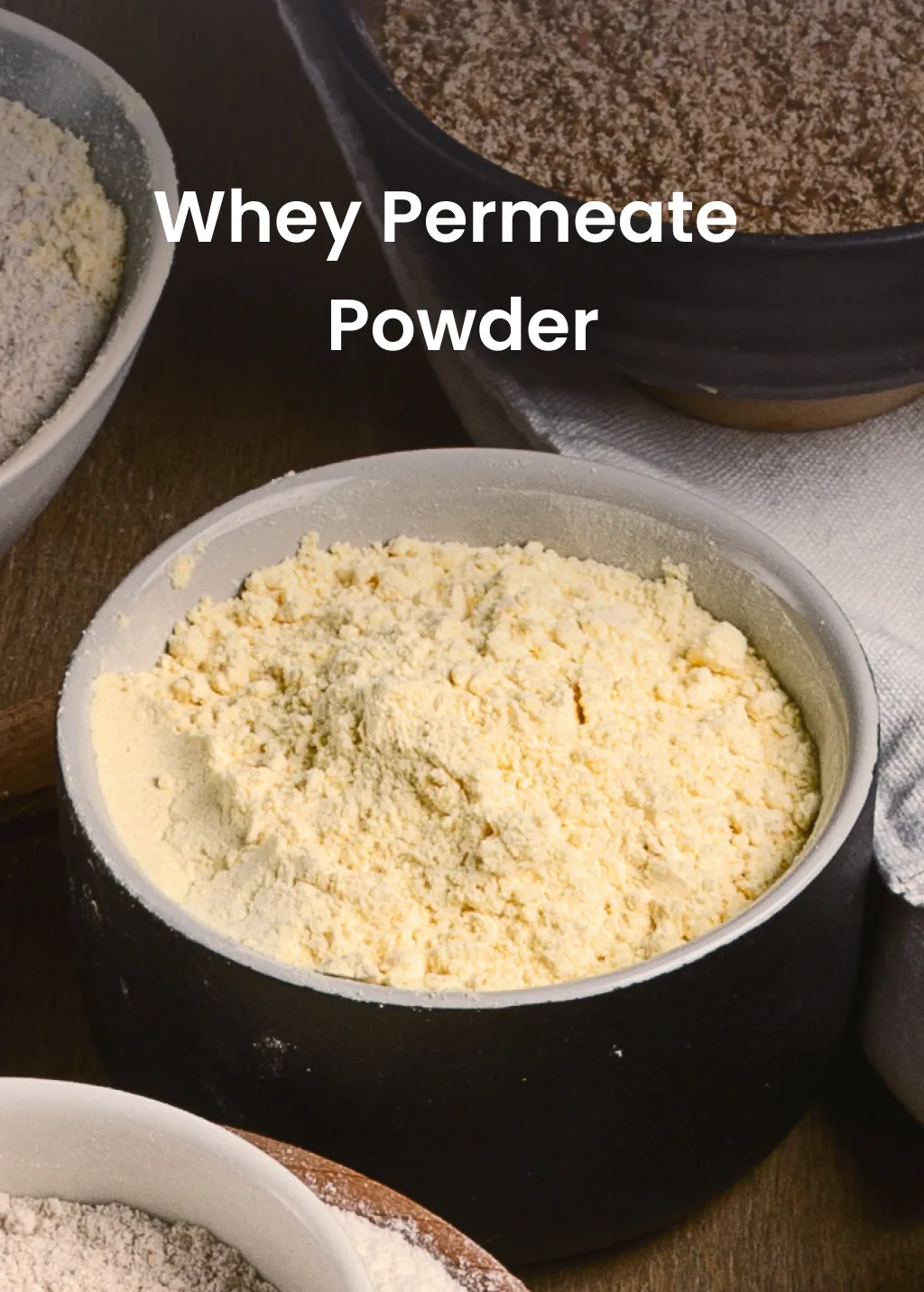
Whey Permeate Powder
- Physical State
- Solid
- Appearance / Color
- White to cream powder
- Odor
- Mild dairy
- Taste
- Slightly sweet
- Moisture Content (%)
- <6%
- pH
- 6.0-7.0
Technical Document
Brief Overview
Whey permeate powder is a yellowish powder with a slightly sweet taste and a mild dairy flavor. It is free-flowing and easily dispersible in water, making it a convenient ingredient for various food applications. The powder has a low moisture content, typically less than 5%, and a high lactose content, typically between 70% to 85%, depending on the manufacturing process. Whey permeate powder is primarily composed of lactose and minerals such as calcium, magnesium, and potassium.
Manufacturing Process
The manufacturing process of whey permeate powder begins with the collection of whey, which is obtained during the production of cheese or casein. The whey is first subjected to ultrafiltration or microfiltration to remove protein and fat, leaving behind a liquid containing lactose and minerals. This liquid is then processed through reverse osmosis to remove water and further concentrate the lactose and minerals. The concentrate is then spray-dried to produce a fine powder, which is then sieved and packaged.