
Citric Acid Anhydrous (E330) CAS: 77-92-9
Citric Acid Anhydrous (E330) CAS: 77-92-9

The collapse of the June 17 ceasefire and the resumption of tanker attacks have renewed attention on war-risk insurance pricing for global shipping. Chemical procurement teams should evaluate freight costs, insurance exposure and logistics contingency plans.

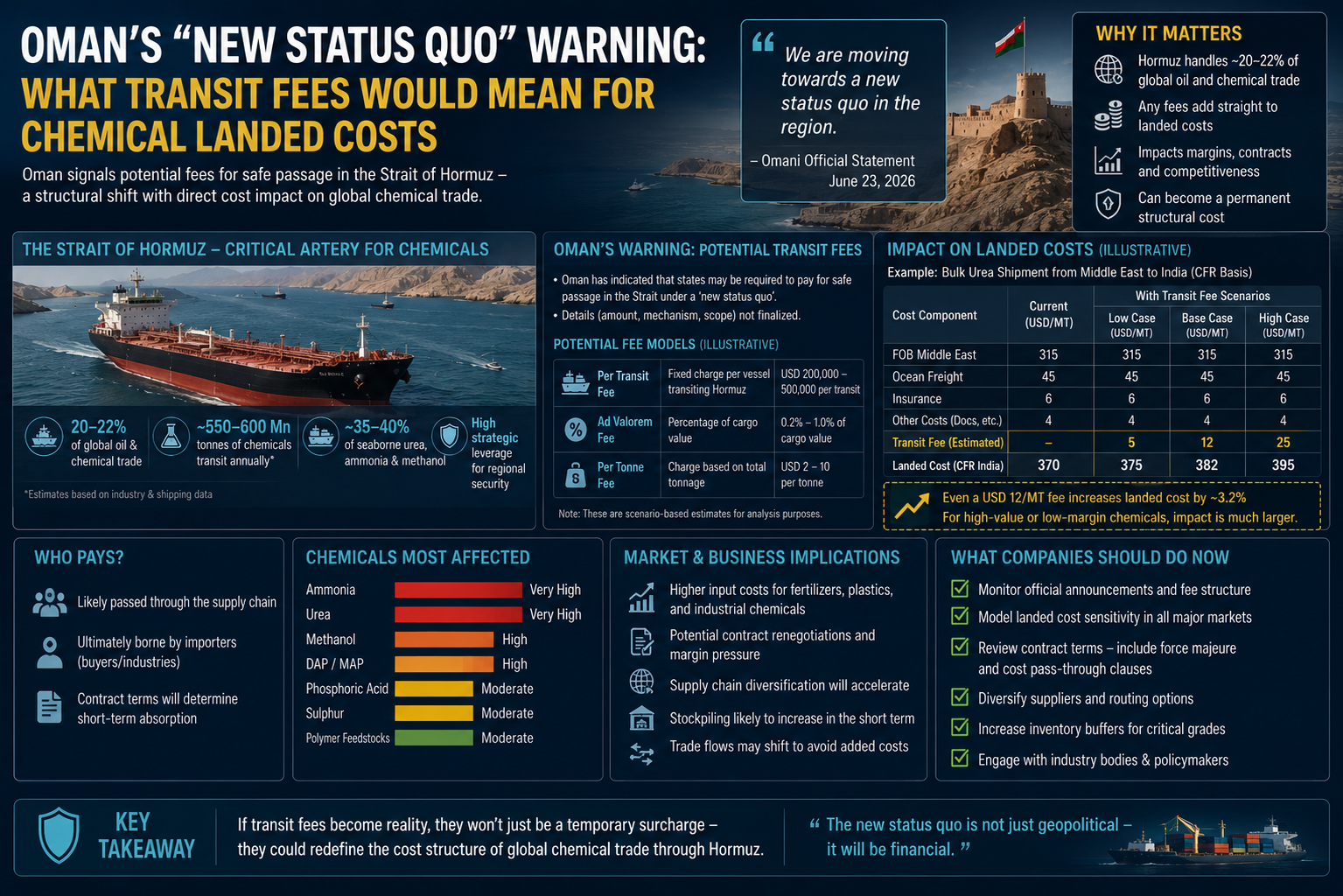
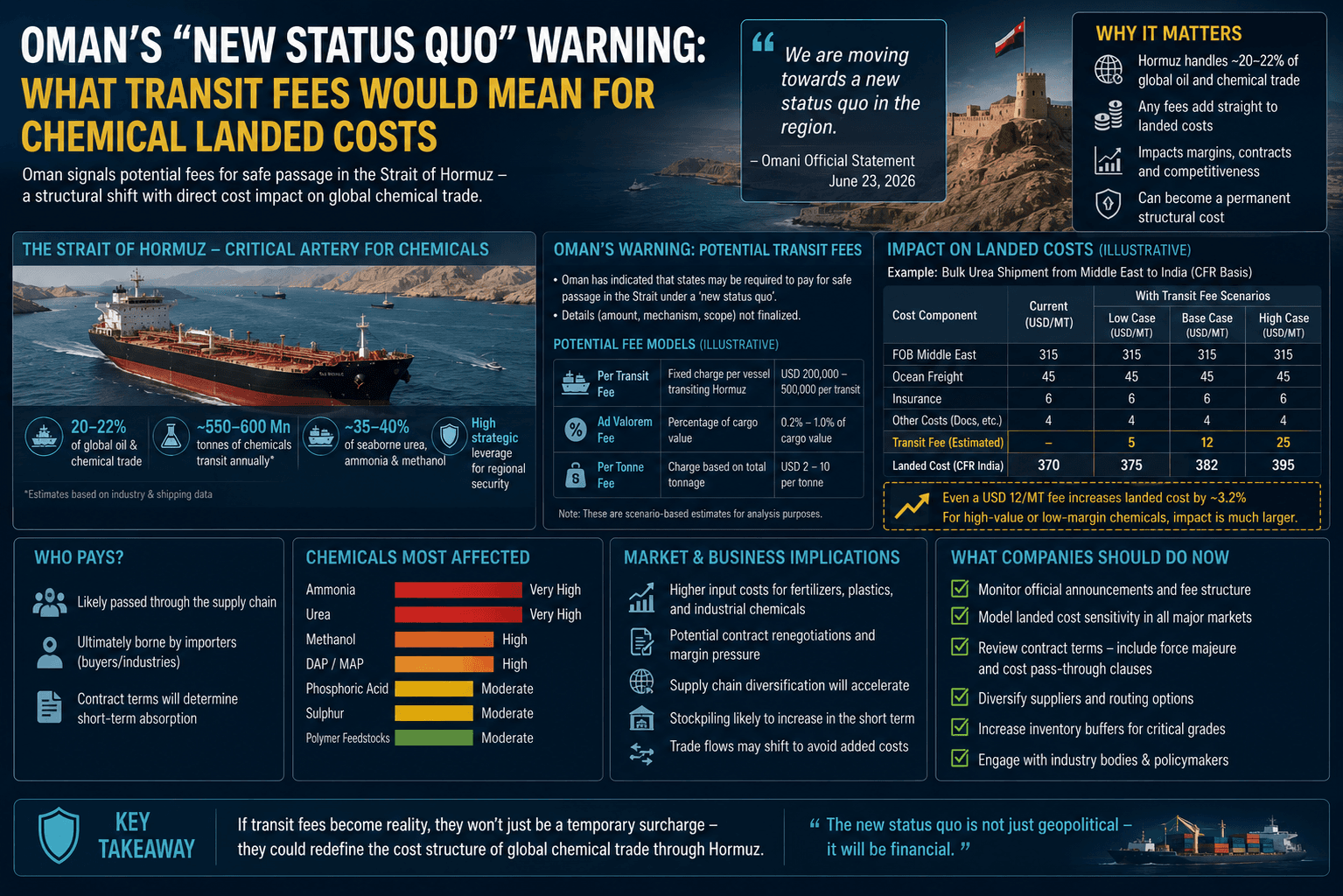
Iran’s proposal to charge “service fees” for Hormuz passage could permanently reshape the economics of global chemical trade. If transit charges become permanent, Gulf-origin chemical supply chains may face $500 million to $1.5 billion in additional annual costs that buyers will ultimately absorb through higher contract pricing.

Kpler confirmed 34 vessel crossings through Hormuz on June 30, a sixfold increase over June’s average daily traffic. For chemical procurement professionals, the number signals the first meaningful Gulf supply recovery in months, but sustained movement over the next 48 hours will determine whether true normalization has begun.

In early 2026 the global chemical market saw a dramatic price spike during the Hormuz crisis, only to reverse course by April even before shipping lanes fully reopened. This article dissects the panic‑driven surge, the factors that triggered the drop, and the procurement intelligence lessons that can help buyers mitigate volatility.

Green ammonia projects across the Gulf have been delayed following the Hormuz crisis, pushing major timelines into 2027–2028. For long-term hydrogen buyers, the disruption strengthens the case for diversifying supply beyond the Gulf into Europe, Africa, and Australia.

India’s fertilizer duty exemption expires June 30 with no confirmed extension in sight. Importers should maximize duty-free volumes now, as policy uncertainty and fragile Gulf supply recovery could sharply raise fertilizer procurement costs in Q3 2026.
We're committed to your privacy. Tradeasia uses the information you provide to us to contact you about our relevant content, products, and services. For more information, check out our privacy policy.